

What can cause Ptosis? What are the symptoms, and how is it treated?
Ptosis is a condition in which the eyelid muscles become weak, causing drooping eyelids. It can affect anyone—some people are born with it, while others develop it due to daily habits that impact the eyelid tissues. However, the most common cause is aging, and nearly all elderly individuals will experience it as they age.
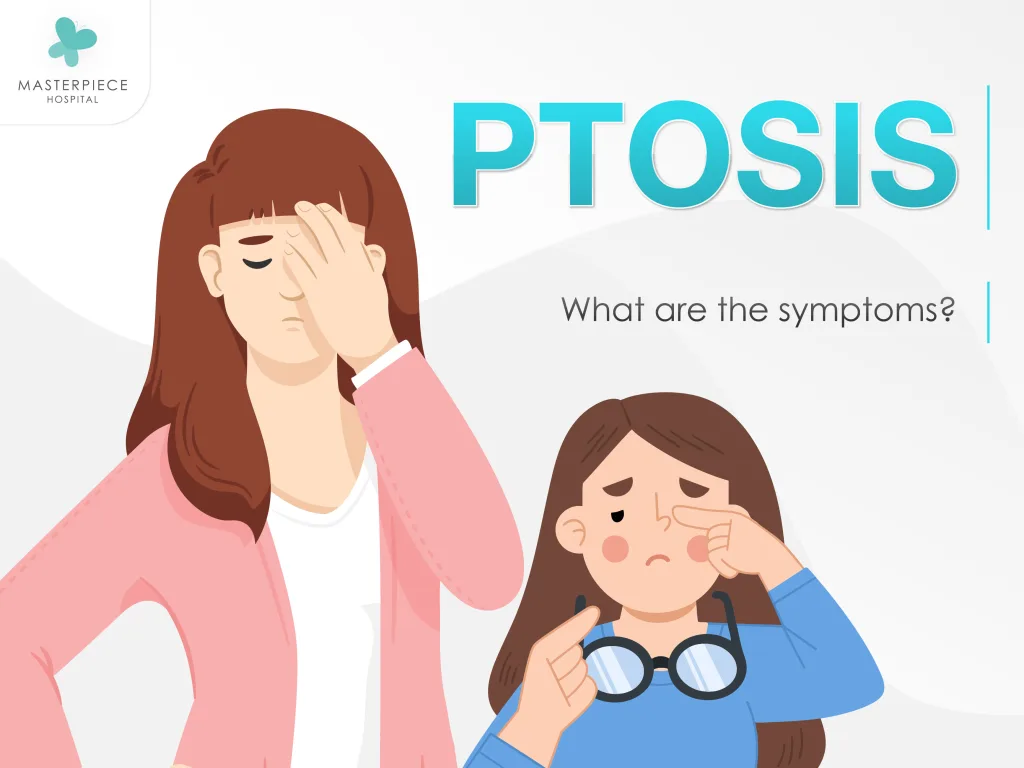
What are the symptoms of Ptosis
Ptosis is a condition where the eye muscles don’t function properly, causing the upper eyelid to droop more than usual, sometimes even covering the pupil. This results in tired-looking eyes, a lack of brightness, and can affect eye strength, leading to sagging eyelid skin. Symptoms vary from person to person and may include:
- Droopy, tired-looking eyes
This is the most noticeable symptom. Even when opening the eyes wider, it’s often impossible. Many people overlook it at first, but if left untreated, it can affect vision and potentially lead to issues like lazy eye or crossed eyes. - Weak eyelid muscles
As we age, eyelid skin naturally sags. Sometimes it’s hard to tell whether the issue is due to Ptosis or just aging-related sagging. In more severe cases, eyelid surgery may be needed to remove the excess skin. - Lazy eye
Lazy eye is a symptom of Ptosis that can develop from childhood. It occurs when one eye has poor vision, causing the brain to rely more on the stronger eye. Over time, the weaker eye becomes underused, leading to a lazy eye. - Deep eye sockets
Deep eye sockets result from fat displacement, causing tired, droopy-looking eyes and giving the appearance of deeper eye sockets. One way to correct this is by transferring fat from the side with more drooping to the side that appears less affected.

What causes Ptosis?
Ptosis not only affects your appearance but can also be bothersome and potentially lead to more serious conditions over time. There are several possible causes of Ptosis, including:
- Congenital Ptosis
This refers to Ptosis present at birth. If left untreated, the condition may worsen with age. - Irritation from daily habits
Ptosis can also result from eye strain or irritation caused by modern lifestyles, such as prolonged screen time or staying up late. - Previous double eyelid surgery
The eyes are delicate, and everyone’s response to surgery can differ. If you’ve had double eyelid surgery before, it may cause trauma to the eyelid muscles, leading to droopy, tired-looking eyes and eventually Ptosis. - Myasthenia Gravis
This is a neuromuscular disorder in which the body’s immune system produces antibodies that block or destroy acetylcholine receptors at the nerve-muscle junction. This reduces the transmission of nerve signals to muscles, causing weakness. When it affects the eye muscles, it can’t be treated with surgery—only medication can help. - Rapid weight loss
This is a neuromuscular disorder in which the body’s immune system produces antibodies that block or destroy acetylcholine receptors at the nerve-muscle junction. This reduces the transmission of nerve signals to muscles, causing weakness. When it affects the eye muscles, it can’t be treated with surgery—only medication can help. - Rapid weight loss
Losing weight too quickly or using weight-loss drugs can lead to sagging skin around the eyes, which may contribute to Ptosis. However, this cause is relatively uncommon and varies from person to person.
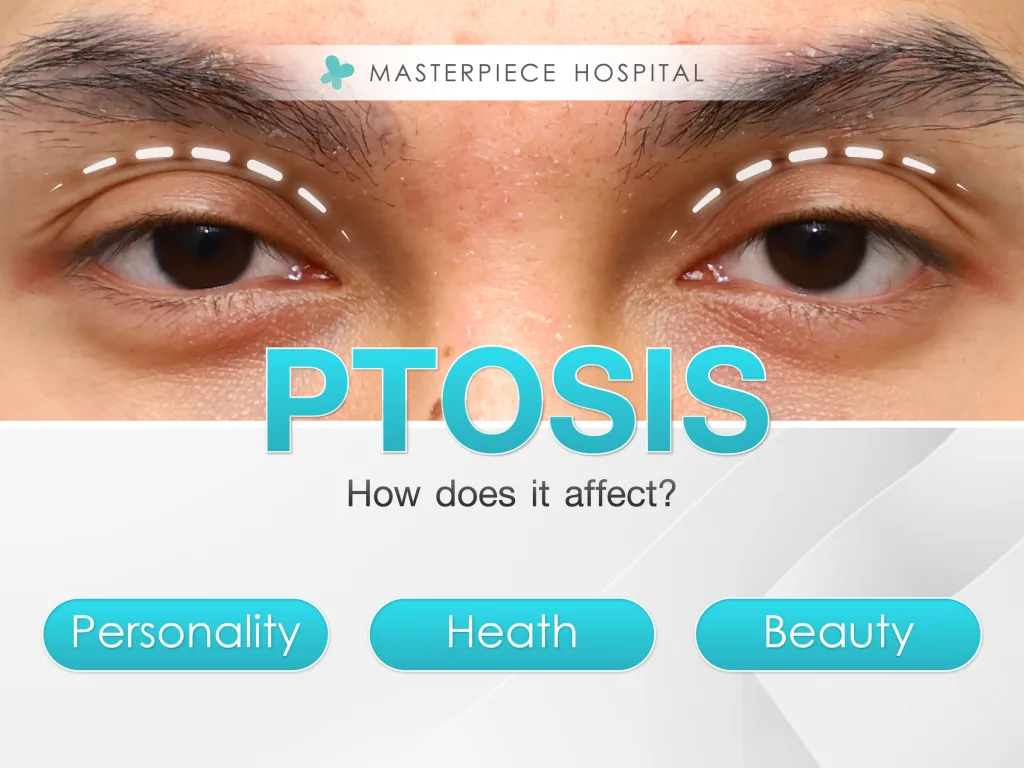
How does Ptosis affect you?
The effects of Ptosis make daily life difficult and also harm our appearance. While it’s not life-threatening, leaving it untreated only brings negative consequences. Ptosis affects us in the following ways:

- Appearance: Causes droopy, sleepy-looking eyes, leading to frequent brow raising or head tilting, which affects one’s image.
- Health: Astigmatism and blurry vision from straining to keep the eyes open.
- Beauty: The face looks tired, sleepy, and constantly worn out.
How to fix Ptosis
Ptosis can have many underlying causes, so it’s important to address and treat the root of the problem. If left untreated, it can recur at any time. Therefore, treatment should be timely and targeted. There are two main ways to fix Ptosis: eye muscle exercises and corrective surgery. The methods are as follows:
Ptosis Correction Surgery
Ptosis surgery must be performed by a specialist, as the eyes are one of the most delicate organs, and each person’s eyelid condition is different. There are three main surgical techniques used to correct Ptosis:
- Internal Incision Eyelid Muscle Adjustment (Mullerectomy)
This method leaves no external scar, causes minimal swelling and bruising (typically less than 7 days), has fewer side effects, and usually results in a natural-looking eyelid crease. - External Incision Eyelid Muscle Adjustment (Levator Surgery)
This technique is used when the eyelid droops significantly or in revision cases after previous eyelid surgery. It enhances the function of the levator muscle. Swelling and bruising are similar to standard double eyelid surgery. - Frontalis Sling Surgery
This method is used when the patient cannot lift the eyelid on their own, typically in congenital cases. A sling is created using fascia from the thigh muscle instead of synthetic materials, as it lasts longer and has fewer complications.
How much does ptosis surgery cost at Masterpiece Hospital?
Treating ptosis requires experience, technique, and specialized expertise, as the eyes are delicate and play a crucial role in daily life. To avoid complications later on, it’s important to choose a trustworthy hospital or clinic. At Masterpiece Hospital, ptosis treatment is handled by ophthalmologists with modern equipment, standard operating rooms, and recovery facilities, ensuring safety and peace of mind throughout the treatment process. For more information about ptosis correction surgery, please contact us here.
Ptosis correction price
Ptosis correction surgery at Masterpiece Hospital starts at 54,000 THB. The final cost may vary depending on the individual, as symptoms and severity differ. If you’re interested in ptosis correction, feel free to contact us here for more information.