
Tummy Truck
Tummy Tuck surgery is a key solution for transforming a sagging and lacking firmness abdomen into a smooth and perfectly contoured one. It is ideal for individuals with a large abdomen, stretch marks, sagging skin, and a lack of skin firmness caused by abdominal muscle stretching due to pregnancy and childbirth or sudden and rapid weight loss. Abdominal liposuction alone may not be very effective in solving these issues. Instead, combining it with a Tummy Tuck procedure can provide a permanent solution to sagging, stretched, and loose abdominal skin. The surgery is performed by a surgeon with over 10 years of experience, with an anesthesiologist in every case, ensuring hospital-standard safety and reliability.
Who is suitable for a Tummy Tuck?
- Individuals with sagging abdominal skin after childbirth
- Individuals with a sagging abdomen due to weight loss
- Individuals with a sagging abdomen after liposuction
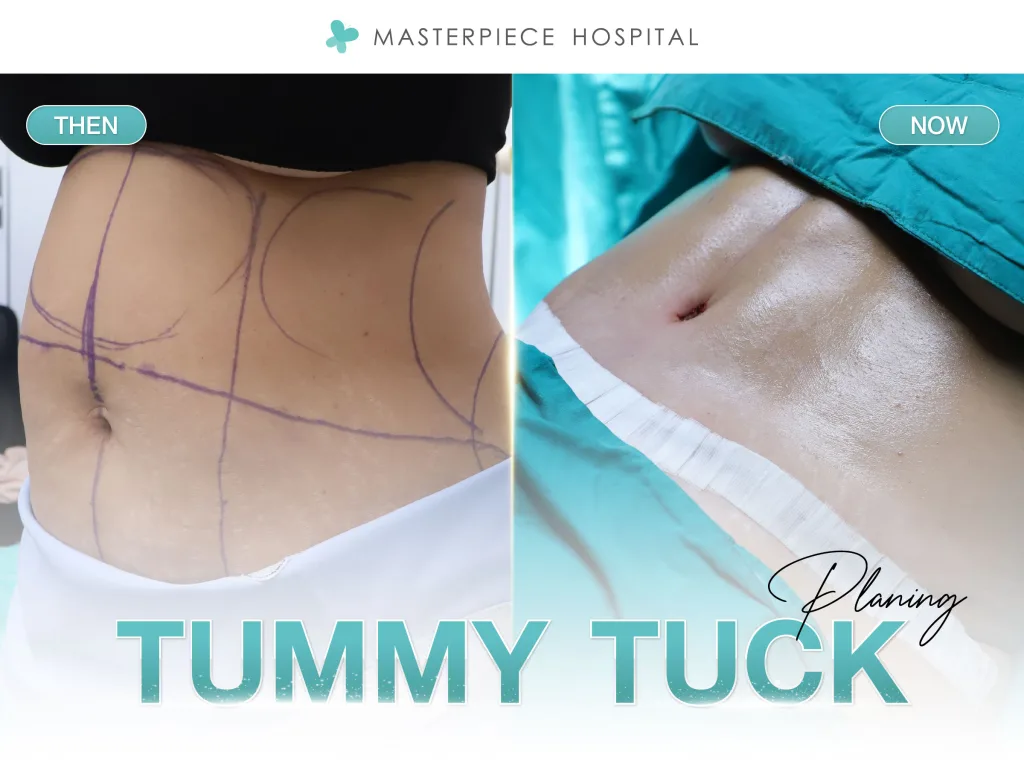
Full Abdominoplasty
A Tummy Tuck is a procedure that addresses sagging, loose, or stretch-marked abdominal skin. It is suitable for individuals who have previously been pregnant. The surgeon will make an incision above the pubic area, extending across the lower abdomen, and reposition the belly button. This is necessary because the original skin above the belly button will be pulled down over the area. In contrast, the skin between the belly button and pubic area will be completely removed. The surgery typically takes about 3–4 hours or more. With this technique, the shape of the abdomen significantly improves after the procedure, as a large amount of excess skin can be removed.
Mini Abdominoplasty
This surgical procedure focuses on tightening only the lower abdominal area below the belly button. It is suitable for individuals who have never been pregnant or have sagging skin due to weight loss or excess tissue and fat that needs to be removed. The incision is shorter than that of a Full Abdominoplasty, and there is no need to reposition the belly button. The surgery typically takes about 2–3 hours and helps boost confidence for those seeking a flat abdomen from the lower stomach to the pubic area.
Tummy Tuck combined with Liposuction
Tummy Tuck surgery can be combined with liposuction, making it suitable for individuals with a significant excess of fat on the sides. The procedure entails partial liposuction along with the removal of abdominal fat and skin, without resulting in additional scars, as the liposuction is performed through the same surgical incision. The hospital has specialists in both liposuction and Tummy Tuck procedures. However, whether these procedures can be performed together primarily depends on the surgeon’s evaluation.

Preparation for Tummy Tuck Surgery
- Inform your doctor of any underlying health conditions, current medications, surgical history, drug allergies, or food allergies. (If you have medical records from another hospital, bring them on the consultation day or inform the clinic before booking the surgery.)
- Patients taking blood thinners, medications that affect blood clotting, or other chronic medications should consult their doctor or notify the clinic before scheduling the surgery.
- Stop taking all kinds of vitamins and dietary supplements, such as vitamin E, fish oil, ginkgo biloba, grape seed extract, ginseng, etc., for at least one month before surgery.
- Don’t drink water or eat any food for at least 8 hours before surgery.*
- Wash your hair thoroughly the day before surgery. Don’t wear makeup or contact lenses on the surgery day. If you have vision issues, wear glasses instead.
- Don’t wear any jewelry on the day of surgery, including earrings, necklaces, rings, or any body piercings. (If anything can’t be removed, inform the staff.)
- Don’t smoke for at least 4 weeks before and after surgery. Chemicals in cigarettes reduce oxygen levels in the blood and damage the cells that help wounds heal, limiting blood supply to the surgical area. This can cause oxygen deprivation in the skin, delay healing, and increase the risk of infection.
- Avoid alcoholic drinks 1–2 days before surgery and for at least one week after.
- Before surgery, make sure your fingernails and toenails are clean. Don’t apply nail polish or wear any artificial nail type.
- You’ll need to get a blood test at the hospital at least 5–7 days before surgery. (If you can’t come in, you may submit test results from another clinic or hospital.)
- If you’re over 45, you’ll need a health check and a medical certificate before surgery (subject to the doctor’s discretion).
- Prepare yourself mentally. Don’t get overly anxious, and understand that swelling, bruising, and changes in appearance are normal after surgery. It takes time for wounds to heal and adjust to your new look.
After Care
- After a Tummy Tuck, you’ll need to stay in the hospital for at least 2–3 days.
- During the first 1–2 days post-surgery, you should remain in a bent position and urinate through a catheter while in bed. The catheter is usually removed on the second day after the procedure.
- On day two, you may begin walking slowly while slightly bent. You might need to stay in this position for 1–2 weeks before being able to stand fully upright.
- While recovering, if you need to cough, sneeze, laugh, or have a bowel movement, hold a pillow firmly against your abdomen to reduce muscle strain.
- On day three, the doctor will remove the drainage tubes. You may shower afterward, but gently pat the incision dry—don’t rub.
- Swelling at the incision site will be most noticeable during the first three days but should gradually subside within 2–4 weeks and completely resolve within three months.
- After returning home, avoid getting the wound wet. If there’s still gauze covering the area, don’t remove it yourself unless advised by your doctor.
- To avoid constipation, steer clear of foods that may cause it. Instead, eat plenty of fruits and vegetables and drink lots of water.
- Avoid alcohol for three weeks after surgery, as it may cause fluid retention at the surgical site.
- Don’t smoke for at least two weeks post-surgery, as smoking reduces oxygen supply and delays wound healing.
- Sleep with your head and knees elevated by using two pillows under your head and one beneath your knees.
- Wear a compression garment around your abdomen for at least 2–6 weeks to reduce swelling, support the surgical area, and help shape your figure.
- Avoid lifting anything heavier than 2–5 kilograms for six weeks.
- Refrain from exercises that strain your abdominal muscles, such as sit-ups, and avoid high-impact workouts for about six weeks.
- You may shower two days after the drainage tubes are removed.
- The doctor will schedule suture removal around day 10 or 14 post-surgery.
- The surgical scar will be most visible initially but will gradually fade over 1–2 years.